Tried explaining sin to five-year-old once. Used word "transgression." They stared at me like was speaking different language.
Because Kids need simple language. Concrete examples. Things that connect their actual lives.
Don't Use Big Theological Words
Sin. Transgression. Iniquity. Repentance. Redemption.
Kids don't know what those mean. Using them doesn't make sound smart. Makes it sound confusing.
Say "wrong choices" instead sin. Say "saying sorry and changing" instead repentance. Say "being forgiven" instead redemption.
Same concepts but language they actually understand.
Had kid ask what sin means. Told him when we do things that hurt others or make God sad. He got it immediately.
Different kid asked what iniquity means. Had no idea how explain that one. Stuck with "sin" after that.
Use Examples From Their Lives
Don't talk about abstract sin concepts. Talk about hitting siblings. Taking toys that aren't theirs. Lying to parents. Being mean to friends.
Those are things kids actually do, can relate to and feel bad about.
"Ever take something that wasn't yours? That's sin. It hurts the person you took it from. Makes God sad."
Kid nodded. He'd definitely taken things before an made connection immediately.
Abstract theological concepts? Lost them. Their own behavior? Get it.
The Mess Illustration
Spill something on purpose, Juice, Water, Glitter if feeling brave.
Make mess, then try clean up. Show how hard it is get everything completely clean. Some stain left behind. Some glitter never coming out.
That's sin. Makes mess. We can try clean up ourselves but can't get it perfect. Need Jesus help to make us completely clean.
Kids watch you juice spill, watch you try cleaning and see stain left.
Makes it visual. Concrete. Something can see and understand.
Had kid volunteer make mess. Dumped entire bottle juice on floor. That was more mess than needed but proved point.
The Broken Toy Analogy
Show broken toy. Ask if ever broke something on purpose or accident.
Talk about how when they break something they need to fix it. Say sorry and make it right if can.
That's what forgiveness is about. Fixing what's broken. Making relationship right again.
Some things can't be fixed completely. That's where Jesus comes in. He fixes what we can't fix ourselves.
Kids get broken things. They've broken stuff. They've had stuff broken. Makes sense them.
Red and White Hearts
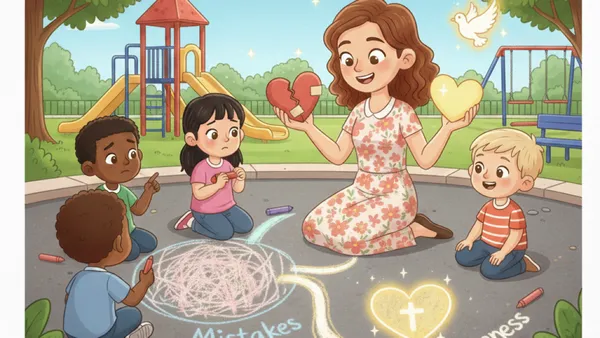
Give kids red paper hearts. Represent hearts with sin. Talk about wrong choices make.
Then talk about Jesus forgiveness. Trade red hearts for white hearts. White represents being clean and forgiven.
Visual representation. Kids can hold in hands. See the change.
Makes forgiveness tangible not just concept.
Had kid ask why can't he just wash red heart to make white. Good question. Explained can't clean our own hearts. Need Jesus do it.
The Debt Illustration
For older kids. Talk about owing someone money. Debt can't pay back.
Then someone else pays for you. You're free. Don't owe anything anymore.
That's what Jesus did. Paid a debt we couldn't pay.
Younger kids don't get debt concept. Older elementary kids starting understand money and owing.
Had kid say his dad owes money for car. Asked if someone paid off would dad be happy. Kid said yes. That's what Jesus did for our sin.
Connection made.
Don't Make God Sound Mean
Some people teach about sin by making God sound angry and scary. Waiting punish you for messing up.
That's not gospel. That's fear.
God is sad when we sin. Not because He's mean. Because loves us and sin hurts us and others.
Parent doesn't get mad when kid touches hot stove because wants be mean. They get upset because they love the kid and doesn't want them hurt.
God same way. Rules aren't to control us but to protect us.
Frame as love not anger. Kids respond better. Also more accurate.
Practice Saying Sorry
Role play apologizing. One kid pretends do something wrong. Other kid responds.
Practice what real apology sounds like. "I'm sorry I hit you. That was wrong. Will you forgive me?"
Not "Sorry you got upset" or "Sorry but you made me do it."
Real apology takes responsibility. Doesn't blame other person.
Kids need practice this. Doesn't come naturally.
Had two kids role play. One kid apologized. Other kid said "I don't forgive you." Had explain forgiveness doesn't mean other person has forgive us. But we still need apologize and mean it.
Complicated lesson but important one.
Talk About Consequences
Forgiveness doesn't always mean no consequences.
Break someone's toy? Forgiven. Still might need replace it.
Hit your brother? Forgiven. Still might get timeout.
Jesus forgives us. Doesn't mean everything goes back how was before. Sometimes have live with consequences of choices.
Kids need understand that. Otherwise think forgiveness means no responsibility for actions.
Had kid ask if God forgives does mom still ground you. Yes. Forgiveness from God different than consequences from parents. Both can exist.
Use Bible Stories They Know
David and Bathsheba too heavy for young kids. Zacchaeus good. Peter denying Jesus good for older kids. Prodigal son great.
Stories where someone messed up. Felt bad. Made it right. Was forgiven.
Kids connect stories better than lectures.
Tell story Zacchaeus. Cheated people. Felt bad. Paid them back. Jesus forgave him.
Kids get that. Did something wrong. Made it right. Was forgiven. That's how works.
Don't Shame Kids
Teaching about sin isn't about making kids feel terrible about themselves.
It's about helping understand everyone messes up. Everyone needs forgiveness. That's why Jesus came.
If kid leaves lesson feeling like they're bad person did it wrong.
Should leave knowing make bad choices sometimes. But God loves them. Jesus forgives them. Can make better choices.
Big difference between "you're bad" and "you did something bad." One attacks identity. Other addresses behavior.
Age Differences Matter
Preschoolers: Keep simple. Wrong choices make people sad. Saying sorry makes better. Jesus helps make good choices.
Early elementary: Introduce word sin. Talk about God's rules. How breaking rules hurts ourselves and others. Jesus forgives when ask.
Older elementary: Deeper concepts. Everyone sins. Can't be perfect on own. Need Jesus. His death paid for our sin. Forgiveness is gift not something earn.
Don't teach same way all ages. Adjust based on development and understanding.
Let Them Ask Hard Questions
"Why Jesus have die? Couldn't God just forgive without that?"
"If God forgives everything does mean can do whatever want?"
"What if do something really bad? Will God still forgive me?"
Good questions. Hard questions. Let them ask without shutting down.
Don't need perfect answers. Need honest conversations.
Had kid ask if Hitler could be forgiven. Whoa. Deep for seven-year-old. Talked about how Jesus' forgiveness available everyone who asks. Even people did terrible things. That's how big God's love is.
Kid seemed satisfied. Was exhausted.
What Curriculum Helps
Most curriculum covers sin and forgiveness at some point. Quality varies.
Gospel Project does good job connecting sin and forgiveness to bigger story Bible. Not isolated concept. Part God's whole plan.
Kids Sunday School Place keeps explanations simple and age appropriate. Good for younger kids.
Grow Curriculum presents hard topics in accessible ways. Doesn't avoid sin and forgiveness but makes understandable. Parent resources help because kids definitely ask more questions at home about this.
Whatever use make sure developmentally appropriate. Don't expect kindergarteners understand substitutionary atonement. Just need know Jesus loves them and forgives them.
When They Don't Get It
Some kids too young understand fully. That's okay.
Plant seeds. They'll make more sense later.
Kid might not grasp why Jesus had die at age five. But can understand Jesus loves them and wants help make good choices.
That's enough for now. Build on later.
Don't force understanding that's beyond developmental ability.
Why This Matters
Kids need know mess up. Everyone does. That's not the end.
Need know there's forgiveness. There's hope. There's fresh start.
Need know God isn't waiting punish them. He's waiting forgive them.
That's gospel. That's good news. That's what changes lives.
If kids learn this young carry forever. Know they're loved despite mistakes. Know forgiveness available. Know how make things right.
That's worth teaching carefully. Worth getting right.
Because when kid understands sin and forgiveness at their level shapes how see themselves. How see God. How they live.
That's everything we're trying do in kids ministry.
Teach them they're loved. Mess up sometimes. God forgives them. Can make better choices.
Simple message. Life changing impact.